What about people who can’t walk far?
Local access is retained on both stages. Residents, carers, and anyone driving for accessibility reasons can still drive to and park on Wellington Street. What changes is that commuters using it as a shortcut to the CBD will no longer find it a convenient route. The shared street option has a modest parking impact on both stages.
Council voted on 12 May 2026. The shared street option was not adopted. This page sets out the case we made for it, which still bears on the changes and the community consultation on traffic control measures the adopted motion includes. See what was adopted and what comes next.
Stay in the loop as the project moves forward. Council voted on 12 May. The next decisions are what officers design, what the consultation on traffic control measures delivers, and which items are deemed feasible. We'll update you when your voice will count.
We also post updates on Instagram at @nicerwellingtonstreet.
Will Wellington Street be closed?
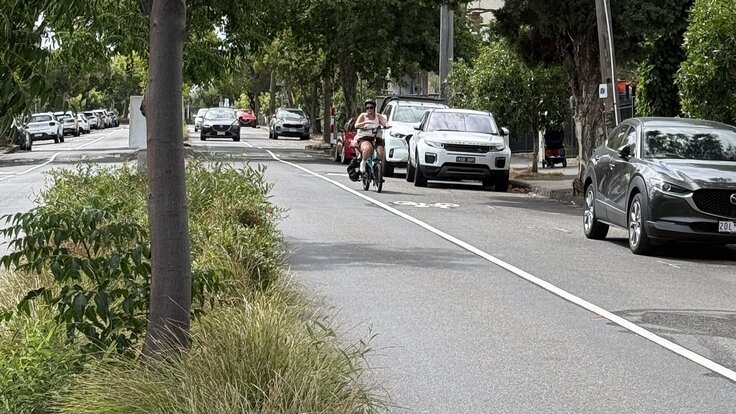
No. What is proposed is a partial traffic barrier, not a road closure. Modal filters stop motor vehicles passing through while people on bikes and pedestrians continue unimpeded. The street remains open to all traffic with a local destination: residents, businesses, the school, the church, and emergency vehicles all retain access. What changes is that CBD-bound commuters passing through will find it an impractical shortcut.
Council consulted VicRoads, the Department of Transport and Planning, and emergency services during the design process. Emergency service providers confirmed the proposals would not affect response times.
How local trips still work
School families, residents, and regular visitors can still drive to and park on Wellington Street. The barrier at Council and Noone Streets means some trips from the south will route via Noone Street and Gold Street instead of straight up Wellington: those streets have speed humps and are well within the area’s local network. For residents on Wellington Street itself, nothing changes. For the church community, Wellington Street parking remains fully accessible from Queens Parade. Sunday services fall outside peak commuter hours; parking availability on Wellington and the adjacent Queens Parade is not affected.
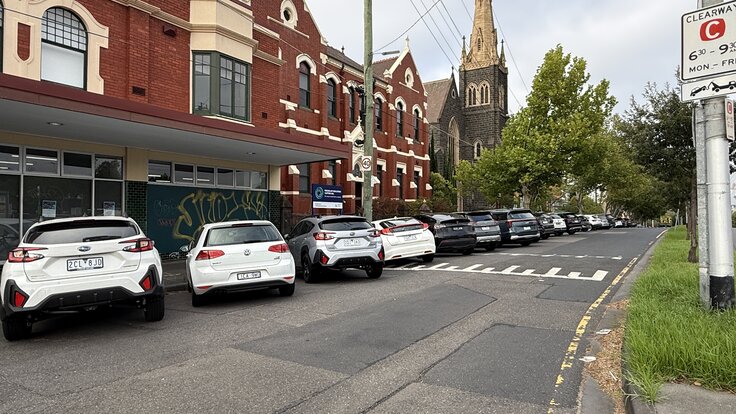
Non-local commuters passing through are the ones who lose a convenient route.
Parking under each option
| Shared Street | Protected Lanes | |
|---|---|---|
| Bays remaining (Clifton Hill section) | 83 of 96 | 30 of 96 |
| Accessible bays (Clifton Hill) | Both retained | Both removed |
| Bays remaining (Collingwood section) | 71 of 81 | 69 of 81 |
Under the shared street option, 83 of the 96 current parking bays on the Clifton Hill stretch remain, with both accessible bays specifically protected1. On the Collingwood stretch, 71 of 81 remain.
Under Option 2, 66 bays are removed, including both accessible bays.
Almost all of the 13 bays removed on Wellington Street under the shared street option are in the northern sub-section between Hodgkinson Street and Queens Parade, away from the school and with additional supply from Queens Parade immediately available. Parking near the school itself is minimally affected.
Congregations using Wellington Street parking for Sunday services retain access, with additional parking on Queens Parade, which is quiet on Sundays.
-
YourSay Yarra, Wellington Street North (Clifton Hill). ↩